Introduction
Many businesses invest in ERP software expecting instant improvements in productivity, inventory control, and financial management. However, ERP success depends on more than choosing the right software. It also depends on how well the solution is planned, customized, implemented, and maintained.
This is where a Business Central Consultant becomes invaluable.
A Business Central Consultant helps organizations implement Microsoft Dynamics 365 Business Central efficiently while ensuring the solution aligns with their business goals. Whether you're a startup, a growing manufacturer, a distributor, or a large enterprise, working with an experienced consultant can save time, reduce costs, and maximize your return on investment.
In this guide, you'll learn what a Business Central Consultant does, why businesses need one, the benefits of expert ERP implementation, and how to choose the right consulting partner for your organization.
What Is a Business Central Consultant?
A Business Central Consultant is an ERP expert who specializes in implementing, customizing, and optimizing Microsoft Dynamics 365 Business Central.
Their role extends far beyond software installation. They analyze your existing business processes, identify inefficiencies, configure the ERP system, train employees, and provide ongoing support.
A consultant acts as the bridge between technology and business operations, ensuring the ERP solution delivers measurable value.
Their expertise typically includes:
ERP implementation planning
Business process analysis
Financial management configuration
Inventory management optimization
Supply chain improvements
Manufacturing workflows
Warehouse management
Reporting and dashboards
Cloud migration
User training
System integration
Ongoing support and optimization
Understanding Dynamics 365 Business Central
Dynamics Business Central is Microsoft's all-in-one cloud ERP solution designed for small and medium-sized businesses as well as growing enterprises.
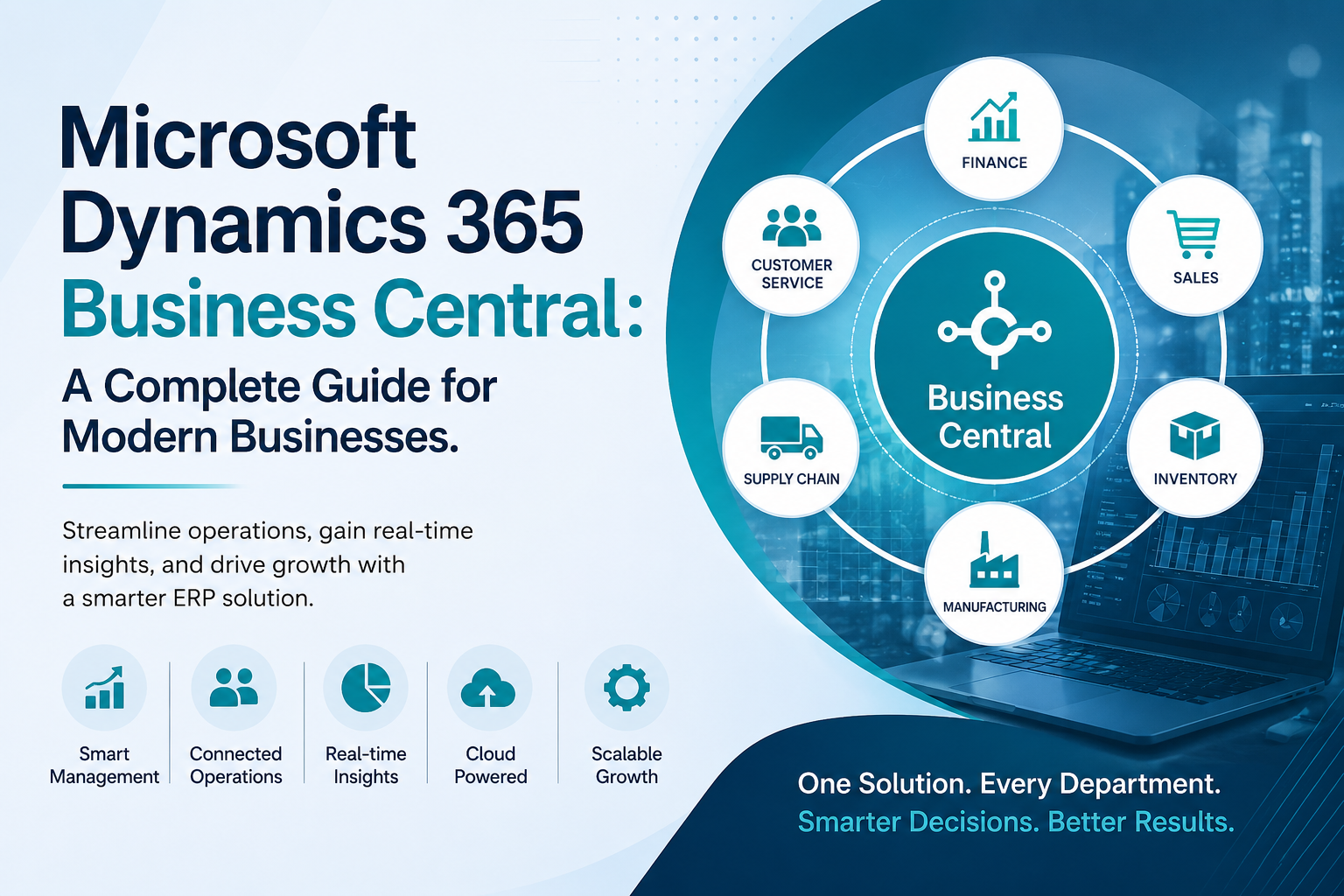
It connects multiple departments into one centralized platform, including:
Financial Management
Track budgets, expenses, profits, taxes, and cash flow from a single dashboard.
Sales Management
Manage quotations, orders, invoices, and customer relationships more efficiently.
Purchasing
Automate procurement processes and vendor management.
Inventory Management
Businesses looking for reliable inventory management software India can benefit from Business Central's real-time inventory tracking, warehouse visibility, and automated stock replenishment.
Manufacturing
Manufacturers can streamline production planning, bills of materials, routing, quality control, and shop floor operations. This makes it one of the preferred options for manufacturing ERP software India.
Project Management
Monitor project costs, timelines, and resource allocation without relying on multiple systems.
Why Businesses Need a Business Central Consultant
Many companies assume ERP software works immediately after installation. In reality, every business has unique workflows, compliance requirements, and reporting needs.
A consultant helps configure the platform according to these specific requirements.
Here are some of the major reasons organizations hire ERP consultants.
Better ERP Planning
Every successful ERP project starts with proper planning.
A consultant evaluates:
Existing software
Business processes
Departmental challenges
Future growth plans
Budget limitations
This ensures the ERP roadmap supports both current and future business objectives.
Faster ERP Implementation
ERP projects often fail because of poor planning and unclear requirements.
Professional ERP implementation follows a structured approach:
Business analysis
Requirement gathering
System design
Configuration
Data migration
Testing
User training
Go-live support
Continuous improvement
This organized methodology reduces delays and implementation risks.
Customized Business Processes
No two organizations operate the same way.
A Business Central Consultant customizes workflows for:
Manufacturing
Retail
Wholesale distribution
Professional services
Logistics
Healthcare
Construction
Trading companies
Instead of forcing businesses to adapt to software, consultants adapt the software to business needs.
Data Migration Without Disruptions
Migrating years of business data can be challenging.
Consultants help transfer:
Customer records
Vendor information
Financial history
Inventory data
Sales records
Purchase history
Proper validation ensures clean and accurate data after migration.
Employee Training
Even the best ERP software delivers poor results if employees don't know how to use it.
Business Central Consultants provide:
Department-specific training
User manuals
Best practices
Ongoing support
Troubleshooting sessions
This improves user adoption across the organization.
Key Skills Every Business Central Consultant Should Have
Not every consultant delivers the same level of expertise.
Look for professionals with experience in:
Microsoft ERP Solutions
A strong consultant should understand Microsoft's ERP ecosystem, including previous ERP platforms and modern Microsoft ERP solutions.
Industry Experience
Industry knowledge helps consultants recommend best practices instead of generic implementations.
Experience in manufacturing, logistics, finance, or retail adds significant value.
Technical Expertise
Consultants should understand:
System integrations
APIs
Extensions
Security
Data migration
Reporting tools
Communication Skills
ERP projects involve multiple departments.
Consultants should communicate effectively with:
Business owners
Finance teams
Operations managers
IT departments
End users
Business Central and Azure Cloud
Modern businesses increasingly prefer cloud-based ERP systems.
Business Central runs seamlessly on Azure Cloud, offering several advantages.
Improved Security
Microsoft provides enterprise-grade security features including:
Data encryption
Identity management
Threat protection
Regular backups
Anywhere Access
Employees can securely access business data from:
Office
Home
Branch locations
Mobile devices
Automatic Updates
Unlike traditional ERP systems, cloud deployments receive regular updates without complex infrastructure upgrades.
Power Platform Integration
One of the biggest advantages of Business Central is its integration with Power Platform.
Businesses can create custom solutions using:
Power BI
Generate interactive dashboards and real-time reports.
Power Apps
Build custom applications without extensive coding.
Power Automate
Automate repetitive workflows, approvals, notifications, and document processing.
These tools increase productivity while reducing manual work.
Business Central for Manufacturing Companies
Manufacturers face challenges including:
Production delays
Inventory shortages
Cost control
Demand forecasting
Quality management
Business Central addresses these through advanced manufacturing capabilities.
Companies searching for manufacturing ERP software India often choose Business Central because it supports:
Production planning
Material requirement planning
Capacity management
Shop floor tracking
Cost analysis
Production scheduling
A consultant ensures these modules are configured according to actual production workflows.
ERP Software for Logistics Industry
The logistics industry depends on speed, accuracy, and visibility.
Modern ERP software for logistics industry should manage:
Fleet operations
Warehouse activities
Shipment tracking
Inventory
Vendor coordination
Billing
Business Central integrates these functions into one centralized platform.
Consultants also integrate third-party logistics applications when required.
Enterprise AI Solutions and Business Central
Artificial intelligence is becoming an essential part of ERP.
Modern Enterprise AI solutions enhance Business Central by helping businesses:
Forecast demand
Predict inventory shortages
Detect unusual financial transactions
Automate customer service
Improve sales forecasting
Generate intelligent reports
AI-driven insights help businesses make faster and more informed decisions.
How Dynamics 365 Business Central Partners Add Value
Working with certified Dynamics 365 Business Central partners offers several advantages.
These partners provide:
Certified implementation specialists
Microsoft best practices
Industry expertise
Technical support
Custom development
Long-term consulting
Rather than simply installing software, they guide businesses throughout their digital transformation journey.
From Microsoft Navision to Business Central
Many organizations still use Microsoft Dynamics NAV.
A trusted Microsoft Navision partner helps businesses migrate from NAV to Business Central while preserving historical data and minimizing operational disruptions.
Benefits of upgrading include:
Cloud capabilities
Better reporting
Enhanced security
AI-powered features
Continuous Microsoft updates
Improved user experience
Real-Life Example
Consider a mid-sized manufacturing company struggling with disconnected systems.
The finance department used one application.
Inventory was managed using spreadsheets.
Sales relied on separate software.
Production planning was done manually.
A Business Central Consultant analyzed the workflow and implemented Business Central with customized manufacturing, finance, inventory, and purchasing modules.
Within several months, the company achieved:
Better inventory accuracy
Faster financial reporting
Reduced manual data entry
Improved production planning
Better visibility across departments
More informed management decisions
The biggest improvement wasn't simply new software. It was the expert guidance that ensured the ERP system matched the company's operations.
Pros of Hiring a Business Central Consultant
A consultant brings both technical knowledge and business expertise.
Some key advantages include:
Faster ERP implementation
Lower project risk
Better system customization
Improved employee adoption
Higher return on investment
Stronger reporting capabilities
Scalable ERP architecture
Long-term optimization support
Potential Challenges
While hiring a consultant offers many benefits, businesses should also consider:
Initial consulting costs
Time required for employee training
Temporary adjustment during implementation
Importance of selecting an experienced consultant
Choosing the right consulting partner helps minimize these challenges.
Frequently Asked Questions
What does a Business Central Consultant do?
A Business Central Consultant plans, implements, customizes, and supports Microsoft Dynamics 365 Business Central to improve business operations and maximize ERP performance.
Is Business Central suitable for small businesses?
Yes. Business Central is scalable and supports both small businesses and growing enterprises across various industries.
How long does ERP implementation take?
Implementation timelines vary depending on business size, complexity, data migration, and customization requirements. Small projects may take a few weeks, while larger implementations can take several months.
Can Business Central integrate with Microsoft products?
Yes. Business Central integrates seamlessly with Microsoft 365, Teams, Excel, Outlook, Azure Cloud, Power Platform, and other Microsoft services.
Why should businesses work with Dynamics 365 Business Central partners?
Certified partners bring implementation expertise, industry knowledge, customization capabilities, ongoing support, and proven methodologies that reduce project risks.
Conclusion
Investing in ERP software is a major business decision, but software alone cannot transform an organization. Success depends on careful planning, expert implementation, user adoption, and continuous optimization.
A knowledgeable Business Central Consultant ensures that Microsoft Dynamics 365 Business Central is configured to support your unique business processes, improve operational efficiency, and prepare your organization for future growth. Whether you operate in manufacturing, retail, distribution, or logistics, expert consulting can help you unlock the full potential of your ERP investment.
For businesses seeking reliable guidance, experienced implementation support, and scalable Microsoft ERP solutions, Rivira Systems helps organizations navigate every stage of their Business Central journey with practical expertise and industry-focused solutions.
Ready to Modernize Your Business?
Looking to implement Microsoft Dynamics 365 Business Central or optimize your existing ERP system? Connect with Rivira Systems to explore how the right Business Central Consultant can help your business streamline operations, improve decision-making, and achieve long-term growth. Share your questions in the comments or reach out to start your digital transformation journey today.

Write a comment ...